Premium Light Meal & Bento Brand Packaging Upgrade Case Study — Saying Goodbye to the “Takeout Vibe,” Creating a “Mobile Restaurant” Experience with Compartment Gift Boxes
Cliente target:Mid-to-high-end light meal brands, corporate catering suppliers (focused on high-AOV set meals, picnic scenarios, and business meeting meals)
Bisogni fondamentali:
- Dry-Wet Separation & Odor Control:Set meals typically include rice/staple, hot dishes, cold plates, soups, and sauces. Must solve soup spills and flavor transfer caused by hot-cold food contact, which degrades taste.
- Transit Stability:During delivery or customer pickup, boxes easily come apart or internal containers shift, resulting in a “disaster upon opening.”
- Visual Premium:Break away from the cheap foam lunchbox image, boost perceived value through packaging design, making customers feel it’s worth every penny.
- Eco Trend:Reduce plastic use, aligning with modern F&B brands’ sustainability philosophy.
- Project Background: Great Food, Ruined by “Messiness”
We partnered with a health-focused Japanese-style set meal brand. Their R&D was strong, but packaging had always been the weak link:
- Severe Odor Mixing:Previous packaging simply stuffed several round bowls into a large carton with no fixation. By the time it reached customers, curry aroma had contaminated the fruit, and rice was soaked through with sauce.
- Lack of Ritual:Opening the box felt like opening a parcel — zero aesthetics. Customers had no desire to photograph or share it on social media, resulting in zero organic buzz.
- Scenario Limitations:Due to flimsy, leak-prone packaging, many companies hesitated to order their lunches as business meeting meals, fearing it would hurt their professional image.
The brand wanted a packaging solution that could stably hold all food items like a “serving tray” while being directly presentable at the dining table — a truly “all-in-one” experience.
- Hanlong’s Solution: Fusion of Functional Zoning & Visual Aesthetics
Structural Design: Custom Food-grade White Card Insert + Integrated Mailer Box
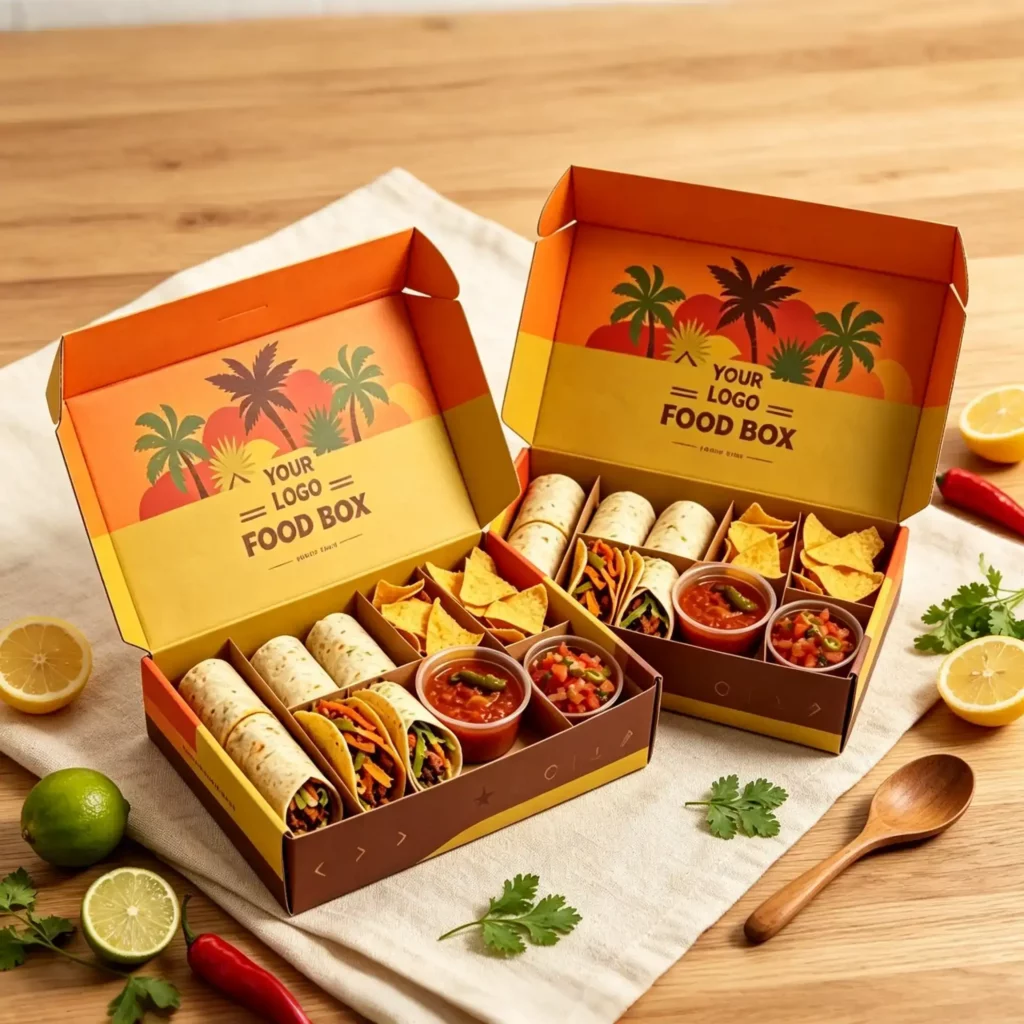
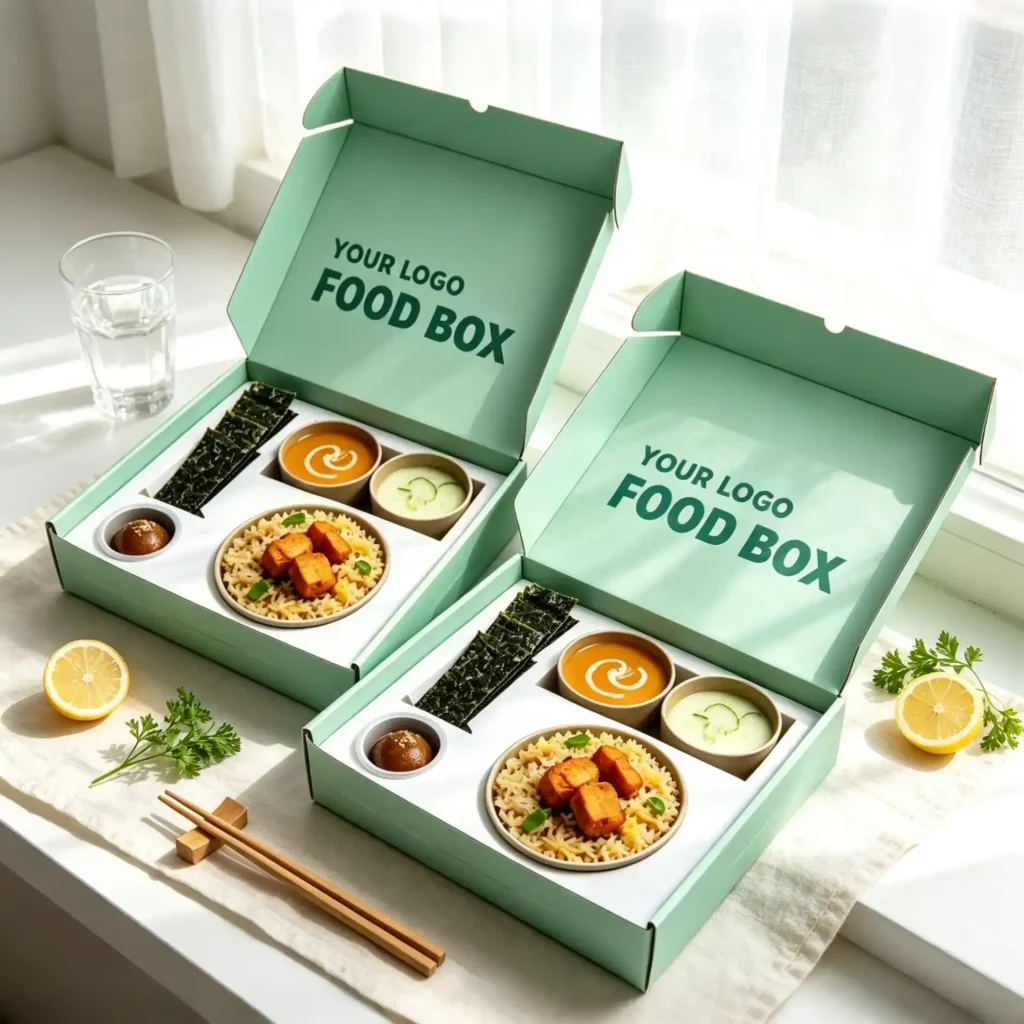
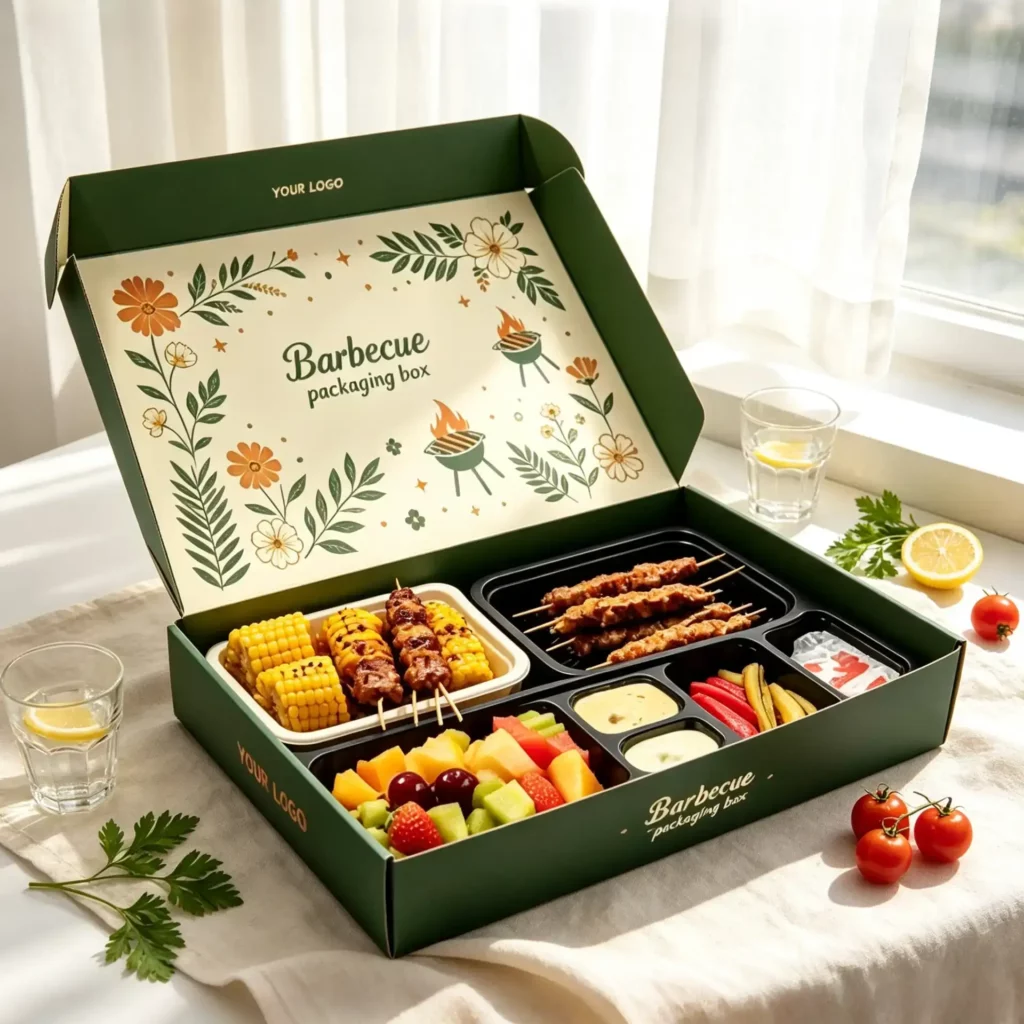
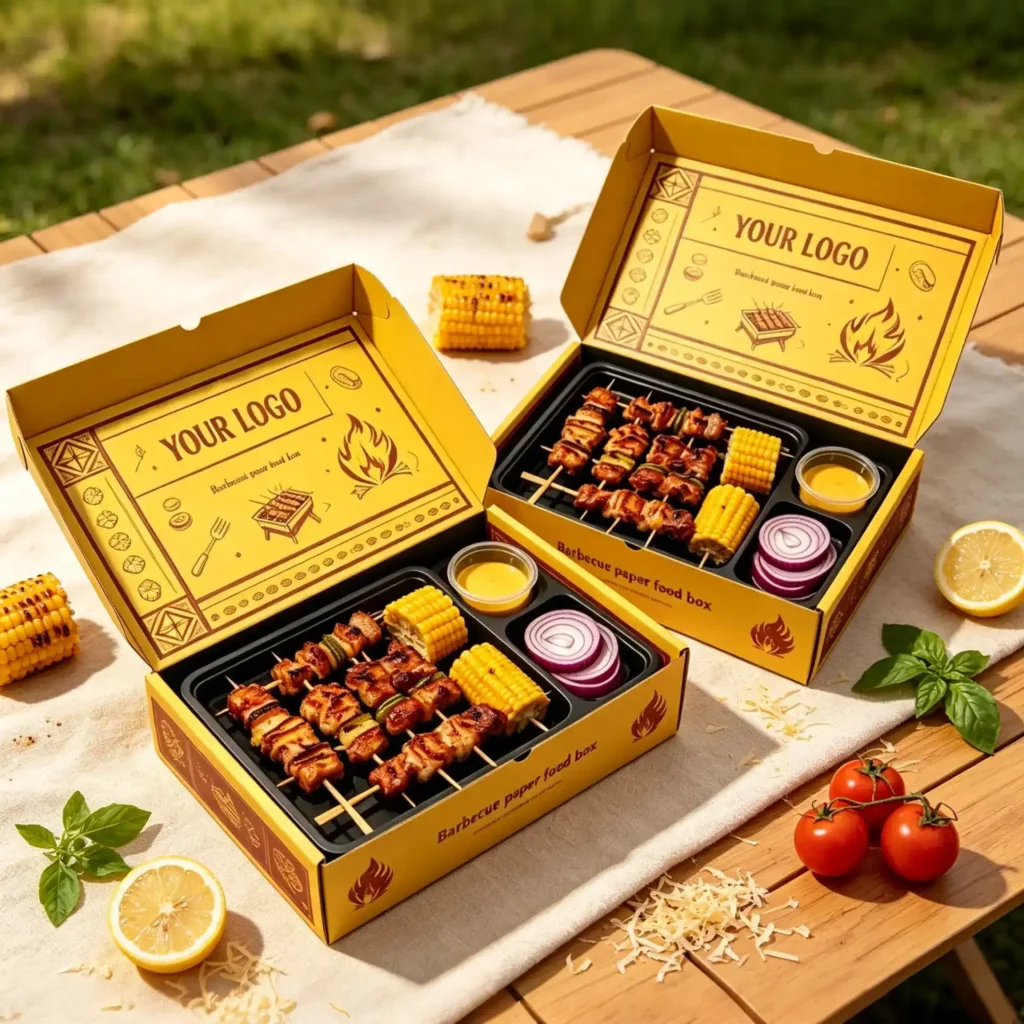
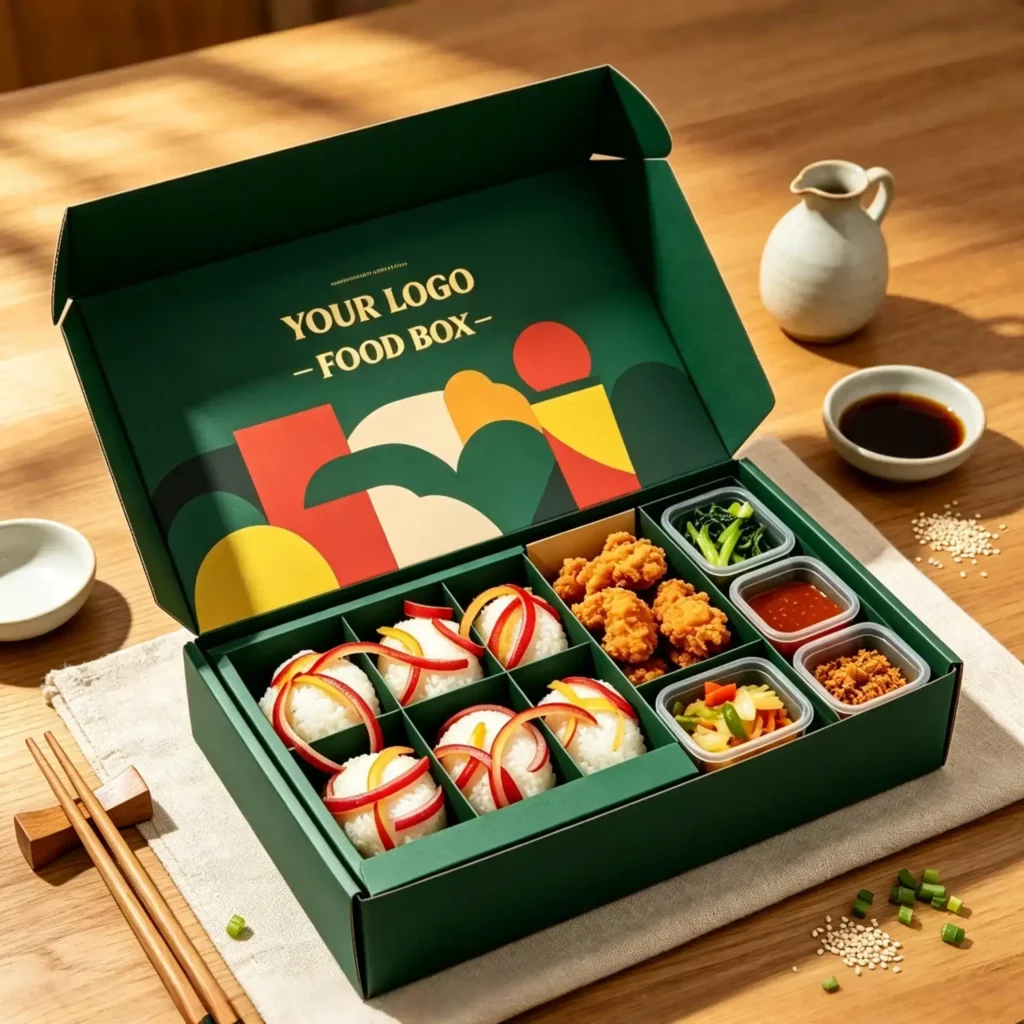
- Precision Die-cut Insert:This was the core highlight. Referencing the green and yellow cases shown in the images, we designed a food-grade white card insert based on the exact dimensions of tableware (round bowls, square containers, long nori boxes).
- Lock-in Positioning:Each cavity features precision cutouts. Bowls snap in and stay put — even with vigorous shaking during transit, nothing shifts.
- Height Differential Design:Soup bowls sit slightly lower; staple sections sit slightly higher. This height difference prevents the lid from pressing against food while making items easier to grab.
Reinforced Mailer Box
- The outer box uses high-grammage kraft paper, white card, or corrugated board. The bottom features a self-locking structure with strong load-bearing capacity — fully loaded boxes won’t deform when carried.
Visual Style: Illustrative Storytelling + Fresh Color Palette
- Inside-lid Canvas:Utilizing the large flat area inside the mailer box lid, we printed exquisite brand illustrations. The moment customers open the box to eat, the first thing they see is a beautiful visual, instantly boosting appetite and mood.
- Color Psychology:
- Warm Yellow:Stimulates appetite, conveying warmth and satisfaction.
- Fresh Green:Communicates health, organic, and freshness.
- Retro Orange:Evokes energy, gathering, and outdoor vibes.
Production & Sustainability
- All-paper Solution: Inserts are made entirely of white card, fully biodegradable. Compared to plastic blister trays, although unit cost is slightly higher, brand favorability increases dramatically.
- Flat-pack Shipping:Outer boxes and inserts ship in folded flat form, drastically saving warehouse space and freight costs.
- Delivery Results
- Satisfaction Rate Surge:After the new packaging launched, negative reviews mentioning “soup leaks” and “odor mixing” dropped to zero. The most-used customer review words became “exquisite” and “straight out of a Japanese drama.”
- Social Amplification:Thanks to the beautiful inside-lid illustrations, Instagram UGC volume tripled, turning packaging into a free advertising channel.
- B2B Order Growth:With stable structure and premium appearance, the brand successfully secured afternoon tea and meeting meal contracts with multiple corporations.
- Hanlong Engineer’s Tip
- Oil & Water Resistance:Even with an all-paper package, inserts in direct contact with food must undergo oil and water resistance treatment (usually PE coating). For hot soups or heavily oiled dishes, we recommend double-sided coating to prevent the paper insert from softening and collapsing.
- Ventilation Holes:For freshly cooked hot food (like fried chicken or stir-fried rice), complete sealing creates condensation that turns food soggy. We recommend designing micro-ventilation holes on the box sides or hidden areas of the lid to maintain crispiness.
- Cutlery Slot:When designing inserts, never forget to reserve space for chopsticks or a spoon! Many designers only account for food containers, leaving nowhere for cutlery — forcing it to awkwardly rest on the lid, which drastically degrades the experience.