


- Home //
- Case //
- Company Cases
Case
There is always a solution that suits you
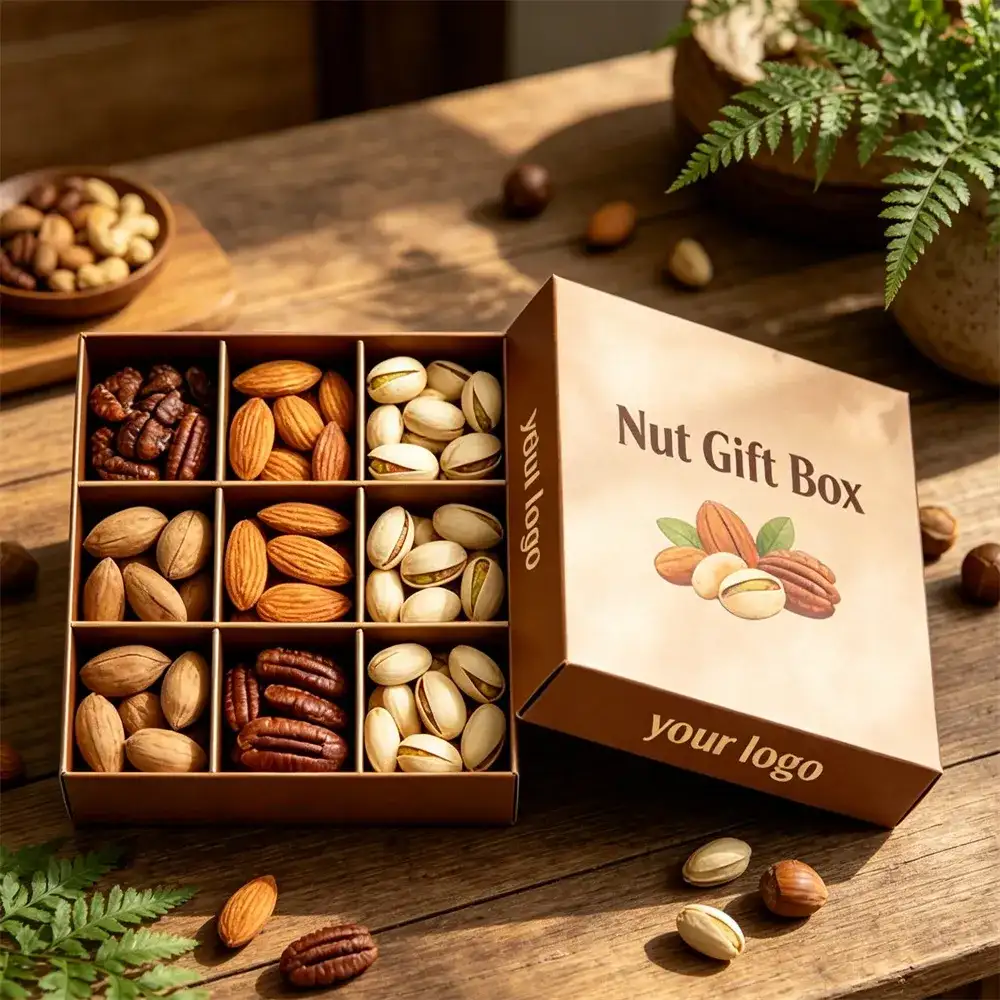
Premium Nuts Gift Box Case Study: 9-Compartment Grid & Morandi Palette — Redefining the Gifting Aesthetics of “Healthy Snacks”
Target Client: High-end nut brands (mixed nuts, daily nut packs, holiday gift sets)
Core Needs:
Sorted Display & Aroma Isolation: Nuts come in all shapes (walnuts, cashews, pecans) and they’re fragile. Needed separate physical dividers to stop them from crushing each other or mixing smells during shipping.
Premium Visuals: Ditch the “loud red and green” souvenir vibe. The packaging needed to signal “natural,” “organic,” and “affordable luxury.”
Easy Access: As a sharing snack, it had to be easy to grab from. And once opened, the box should double as a desk organizer.
Eco & Safety: Direct food contact means materials must be non-toxic. Also needed to align with the plastic-reduction trend.
Project Background: Great Nuts Fear “Mixing,” Gifting Fears “Tackiness”
We worked with a brand that sources nuts globally. Quality was top-notch, but their old packaging was holding them back:
Messy Mix: Old packs dumped all nuts into one big bag, or used cheap plastic dividers. Customers kept getting crushed crumbs and couldn’t see what they were eating.
Cheap Look: Clear plastic bags with a sticker made premium nuts look like bulk bin rejects. Not a gift you’d be proud to hand someone.
No Staying Power: Tossed after eating. Zero brand retention.
They wanted a box that displayed nuts like jewelry but still fit modern home aesthetics.
Hanlong’s Solution: Where Orderly Aesthetics Meet Natural Texture
Structural Design: Grid Partition + Flip-top Book-style Box
Precision Inner Grid: Based on the green and pink cases shown, we designed fixed paper dividers inside.
Individual Compartments:Split into 6 or 9 grids (customized to SKU count). Each cell sized to the nut — bigger for walnuts, smaller for pistachios.
Solid Support:Divider height matches box walls. Keeps nuts from spilling out and protects them from stacking pressure during shipping.
Wide-angle Flip Lid: 180° full open or large-angle flip. When opened, the lid folds flat backward, turning the whole box into a serving tray — perfect for sharing on a coffee table.
Visual Style: Morandi Palette + Minimalist Layout
Color Psychology:
Matcha Green / Pea Green:Signals “natural,” “fresh,” “organic” — fits nuts perfectly.
Dusty Pink / Rose Gold:Targets female buyers or Valentine’s/Mother’s Day gifts. Warm and refined.
Raw Kraft:Emphasizes “original,” “additive-free.” Paired with hand-drawn illustrations for a vintage, earthy feel.
Finishing Touches: On solid-color covers, we used only gold foil or embossing for the “NutBox” logo or brand name. Lots of negative space. Pure minimalist luxury.
Production & Experience
Food-Grade Safety: Inner box paper uses unbleached virgin pulp or coated paper. No fluorescent agents. Safe for direct food contact.
Easy-Open Tear Strip: For fully sealed boxes, we added a hidden tear strip on the side. First opening doesn’t wreck the box structure.
Delivery Results
Price Premium: After the packaging upgrade, the same nut gift set sold for 30% more. Multiple companies picked it for Mid-Autumn/Spring Festival employee gifts.
Repurchase Boost: Customers said “too pretty to throw away” — ended up using them for jewelry or desk supplies. Brand logo stays on their desk long-term.
Breakage Dropped: Independent paper grid absorbed shipping shocks. Nut integrity went from 92% to 99%.
Hanlong Engineer’s Tip
Load-Bearing: Nuts are dense — a box can weigh 1–2 lbs. Bottom board must use high-grammage gray board with lamination, or the base will collapse when lifted.
Moisture Protection: Nuts go soft fast in humidity (especially pecans and cashews). Recommend adding an inner foil bag or PE coating on the insert surface to block moisture.
Dimensional Tolerance: Nut sizes vary by batch. When designing grids, leave 3–5mm extra on length and width. Avoids forcing oversized nuts in or having small ones rattle around.
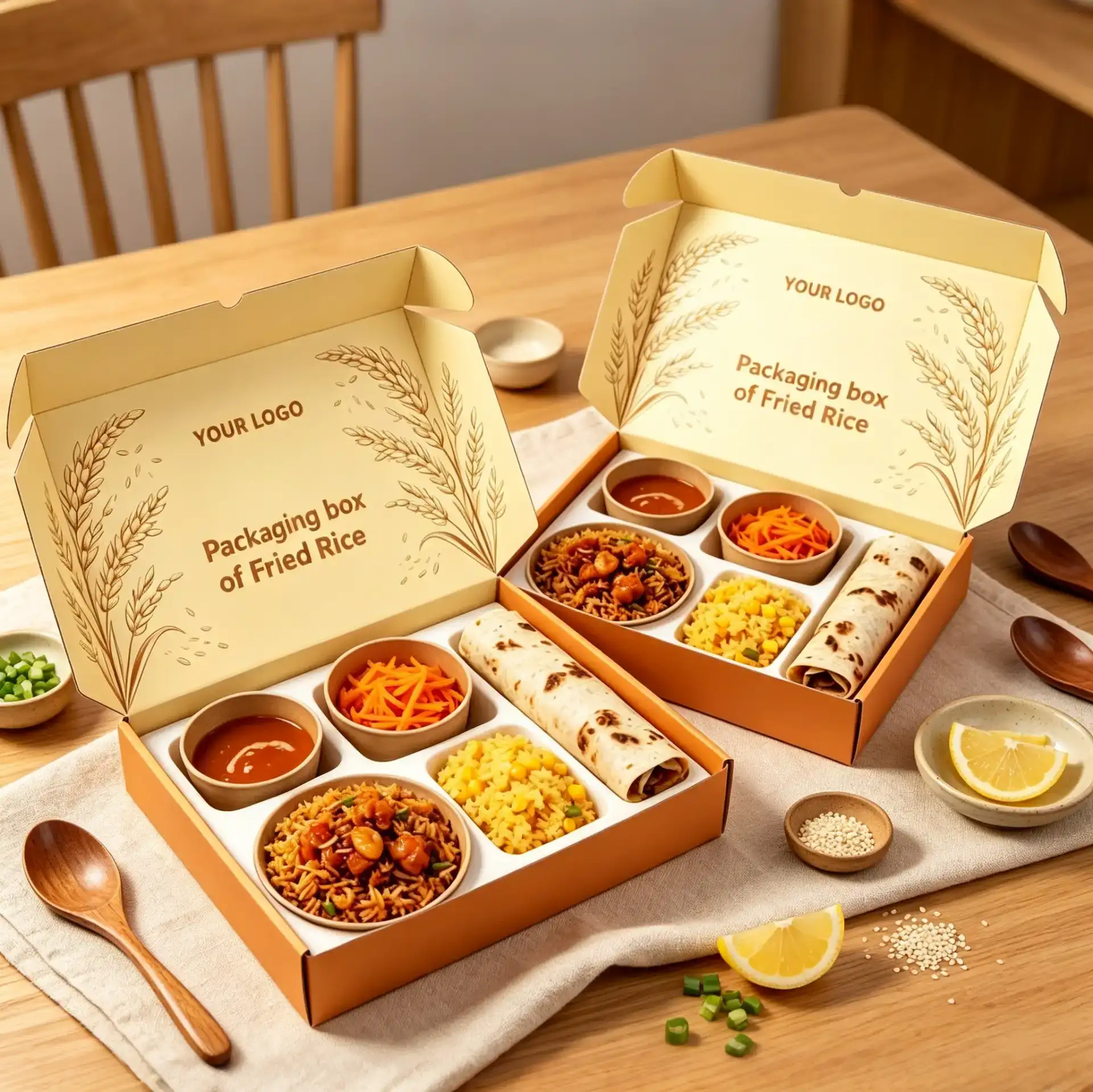
Premium Light Meal & Bento Brand Packaging Upgrade Case Study — Saying Goodbye to the “Takeout Vibe,” Creating a “Mobile Restaurant” Experience with Compartment Gift Boxes
Target Client:Mid-to-high-end light meal brands, corporate catering suppliers (focused on high-AOV set meals, picnic scenarios, and business meeting meals)
Core Needs:
Dry-Wet Separation & Odor Control:Set meals typically include rice/staple, hot dishes, cold plates, soups, and sauces. Must solve soup spills and flavor transfer caused by hot-cold food contact, which degrades taste.
Transit Stability:During delivery or customer pickup, boxes easily come apart or internal containers shift, resulting in a “disaster upon opening.”
Visual Premium:Break away from the cheap foam lunchbox image, boost perceived value through packaging design, making customers feel it’s worth every penny.
Eco Trend:Reduce plastic use, aligning with modern F&B brands’ sustainability philosophy.
Project Background: Great Food, Ruined by “Messiness”
We partnered with a health-focused Japanese-style set meal brand. Their R&D was strong, but packaging had always been the weak link:
Severe Odor Mixing:Previous packaging simply stuffed several round bowls into a large carton with no fixation. By the time it reached customers, curry aroma had contaminated the fruit, and rice was soaked through with sauce.
Lack of Ritual:Opening the box felt like opening a parcel — zero aesthetics. Customers had no desire to photograph or share it on social media, resulting in zero organic buzz.
Scenario Limitations:Due to flimsy, leak-prone packaging, many companies hesitated to order their lunches as business meeting meals, fearing it would hurt their professional image.
The brand wanted a packaging solution that could stably hold all food items like a “serving tray” while being directly presentable at the dining table — a truly “all-in-one” experience.
Hanlong’s Solution: Fusion of Functional Zoning & Visual Aesthetics
Structural Design: Custom Food-grade White Card Insert + Integrated Mailer Box
Precision Die-cut Insert:This was the core highlight. Referencing the green and yellow cases shown in the images, we designed a food-grade white card insert based on the exact dimensions of tableware (round bowls, square containers, long nori boxes).
Lock-in Positioning:Each cavity features precision cutouts. Bowls snap in and stay put — even with vigorous shaking during transit, nothing shifts.
Height Differential Design:Soup bowls sit slightly lower; staple sections sit slightly higher. This height difference prevents the lid from pressing against food while making items easier to grab.
Reinforced Mailer Box
The outer box uses high-grammage kraft paper, white card, or corrugated board. The bottom features a self-locking structure with strong load-bearing capacity — fully loaded boxes won’t deform when carried.
Visual Style: Illustrative Storytelling + Fresh Color Palette
Inside-lid Canvas:Utilizing the large flat area inside the mailer box lid, we printed exquisite brand illustrations. The moment customers open the box to eat, the first thing they see is a beautiful visual, instantly boosting appetite and mood.
Color Psychology:
Warm Yellow:Stimulates appetite, conveying warmth and satisfaction.
Fresh Green:Communicates health, organic, and freshness.
Retro Orange:Evokes energy, gathering, and outdoor vibes.
Production & Sustainability
All-paper Solution: Inserts are made entirely of white card, fully biodegradable. Compared to plastic blister trays, although unit cost is slightly higher, brand favorability increases dramatically.
Flat-pack Shipping:Outer boxes and inserts ship in folded flat form, drastically saving warehouse space and freight costs.
Delivery Results
Satisfaction Rate Surge:After the new packaging launched, negative reviews mentioning “soup leaks” and “odor mixing” dropped to zero. The most-used customer review words became “exquisite” and “straight out of a Japanese drama.”
Social Amplification:Thanks to the beautiful inside-lid illustrations, Instagram UGC volume tripled, turning packaging into a free advertising channel.
B2B Order Growth:With stable structure and premium appearance, the brand successfully secured afternoon tea and meeting meal contracts with multiple corporations.
Hanlong Engineer’s Tip
Oil & Water Resistance:Even with an all-paper package, inserts in direct contact with food must undergo oil and water resistance treatment (usually PE coating). For hot soups or heavily oiled dishes, we recommend double-sided coating to prevent the paper insert from softening and collapsing.
Ventilation Holes:For freshly cooked hot food (like fried chicken or stir-fried rice), complete sealing creates condensation that turns food soggy. We recommend designing micro-ventilation holes on the box sides or hidden areas of the lid to maintain crispiness.
Cutlery Slot:When designing inserts, never forget to reserve space for chopsticks or a spoon! Many designers only account for food containers, leaving nowhere for cutlery — forcing it to awkwardly rest on the lid, which drastically degrades the experience.
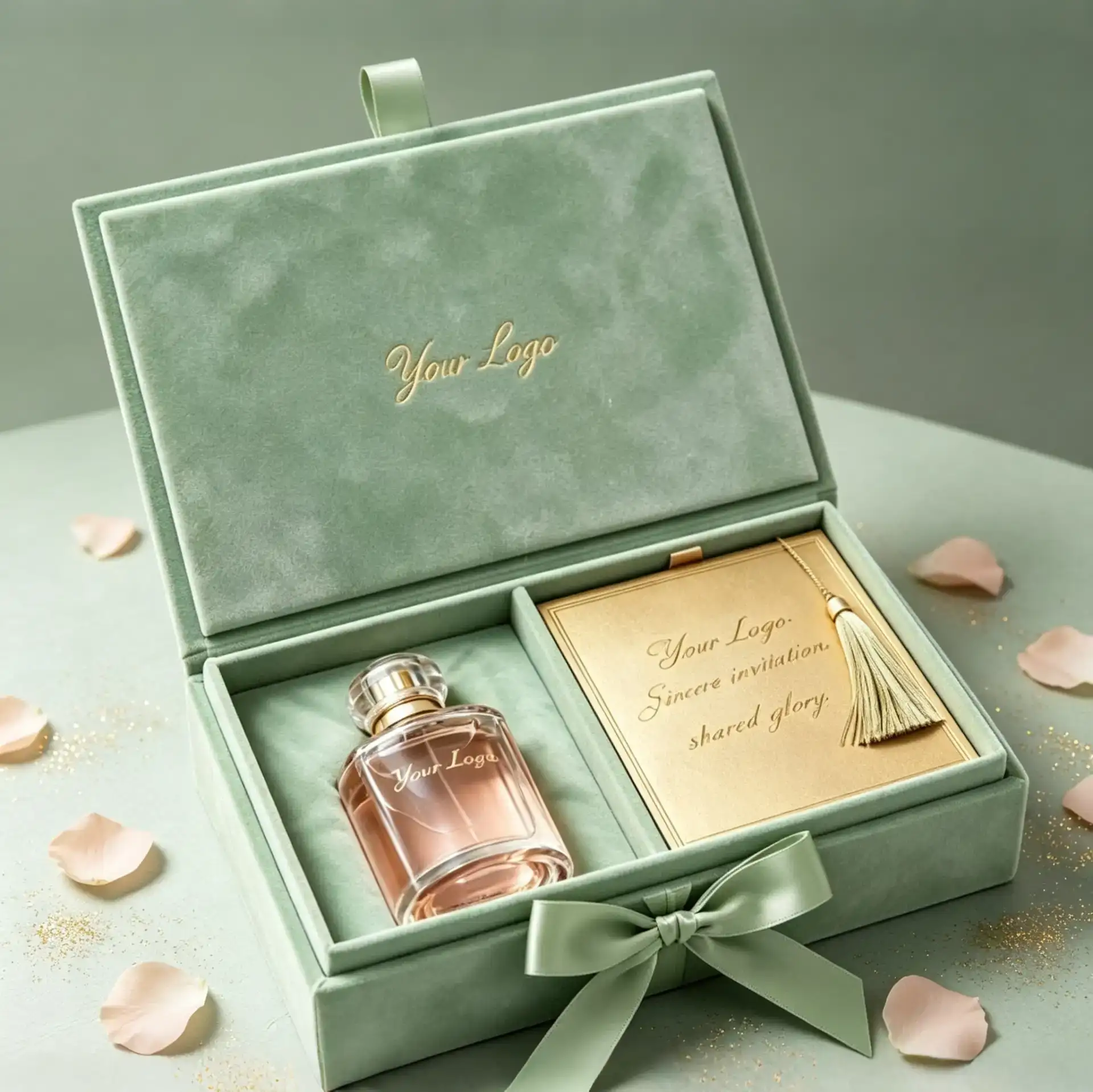
Valentine’s Day Gift Box Case Study for a Beauty & Perfume Brand — Zoned Design & Velvet Texture, Creating an “Unboxing-as-Gifting” Ritual
Target Client:Mid-to-high-end beauty/perfume brands (focused on holiday limited editions and couple gifting scenarios)
Core Needs:
Mixed Loading Challenge:Gift boxes needed to hold both “hard products (perfume bottles/lipsticks)” and “soft decorations (fresh flowers/envelopes/greeting cards)” simultaneously, with zero crushing or damage between the two.
Ritual Atmosphere:As a Valentine’s Day gift, the unboxing experience had to be full of surprises — not sloppy like a regular shipping carton.
Ready-to-Gift Attribute:The packaging itself had to be exquisite enough that customers could hand it over directly without secondary wrapping, saving time and effort.
Texture Matching:Materials needed to match the premium feel of fragrances and cosmetics, avoiding cheap cardboard that would drag down the product’s perceived value.
Project Background: Great Gifts Fear “Messiness,” Ritual Fears “Interruption”
We partnered with a U.S.-based perfume brand that launched limited-edition gift boxes every Valentine’s Day, but their old packaging kept running into trouble:
Product Shifting:Perfume bottles and fresh flowers were mixed together. During transit, bottles would rattle and crush petals, or flower sap would stain the bottles — driving up complaint rates.
Cheap Texture:Ordinary cardboard inserts couldn’t secure irregularly shaped bottles. Upon opening, products would be tilted at odd angles, completely lacking that “gift feel.”
Tedious Assembly:Fresh flowers needed separate wrapping before being placed inside. Labor time was excessive, and during peak Valentine’s Day order surges, shipments were constantly delayed.
The brand needed a custom box that could “perfectly zone” items while making customers “fall in love at first sight,” directly solving gifting pain points.
Hanlong’s Solution: Dual Upgrade of Zoned Fixation & Sensory Experience
Structural Design: 2-in-1 Zoning + Magnetic Closure
Independent Compartmentalized Insert:For the “product + flower/envelope” combo, we designed a custom EVA foam insert.
Product Zone:Precision-molded to fit perfume bottles or lipsticks, embedded with black velvet lining — both anti-slip and visually premium.
Decor Zone:Reserved independent space for flowers or envelopes. Height is slightly lower than the product zone to prevent the lid from crushing decorations.
Magnetic Flip-top Design:Used strong magnetic closure with a crisp “click” sound upon opening, adding an auditory ritual to unboxing. The inside of the lid can feature hot-stamped brand logos or love notes, maxing out the surprise the moment it opens.
Visual & Tactile: Morandi Color Palette + Specialty Paper Finishes
Color Selection:Referencing the case images, we chose low-saturation Morandi pink/blue/green paired with a matte finish, conveying a gentle, romantic Valentine’s vibe that won’t go out of style.
Tactile Upgrade:The outer box uses soft-touch or velvet paper — smooth as skin to the fingertips. The interior features black velvet lining, creating a strong contrast with products to highlight their delicacy.
Production Efficiency Boost
Pre-assembled Inserts:Inserts and outer boxes are pre-glued and fixed. Workers simply place products and decorations, then close the lid. Single-box assembly time is reduced to under 30 seconds, drastically improving peak-season shipping efficiency.
Delivery Results
Complaint Rate Dropped 90%:The zoned design completely solved product-flower mutual damage. Transit damage rate fell from 8% to below 0.5%.
Repurchase Rate Increased:Customers described it as “unboxing a treasure.” Social media photo shares surged, and post-holiday repurchase rates rose by approximately 25%.
Premium Pricing Power:Thanks to the exquisite packaging, the gift box sold at a 40% higher price than previous ordinary versions — yet still sold out, becoming the Valentine’s Day bestseller.
Hanlong Engineer’s Tip
Insert Height:The decor zone (flowers/envelopes) must be at least 5mm lower than the product zone to prevent the lid from crushing decorations upon closure, which would ruin the unboxing experience.
Moisture Protection:Fresh flowers contain water and may cause moisture damage to the paper box over time. We recommend adding a thin PE film barrier at the bottom of the decor zone, or using preserved flowers/dried flowers instead of fresh cuts to extend the box’s shelf life.
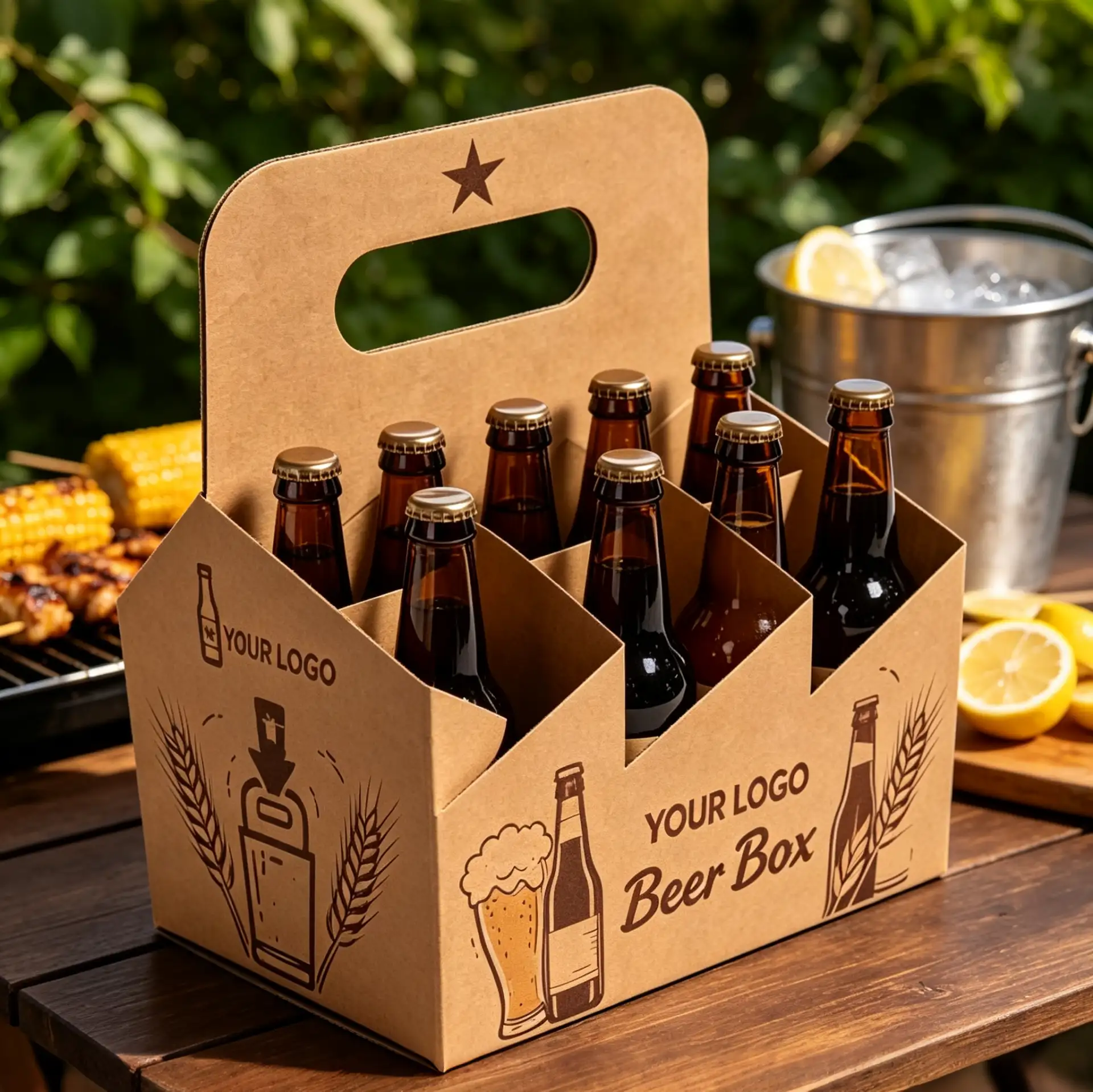
Craft Beer Brand Carry-out Box Case — Heavy-Duty Meets Portability, Creating a “Walking Billboard”
Target Client:U.S.-based craft breweries, fruit wine/sparkling wine brands (focused on brewery pickup, farmers’ markets, and foodservice delivery)
Core Needs:
Extreme Load-Bearing:A 6-pack of glass bottles is extremely heavy, and liquid creates momentum when shaken. Ordinary paper boxes often suffer from handle breakage or bottom puncture.
Portable Experience:As takeaway packaging, it must be easy to carry with one hand without cutting into the hand, suitable for outdoor picnics, parties, and other scenarios.
Display & Protection:Must showcase bottle labels to attract attention while preventing bottles from colliding and breaking.
Eco-Friendly Image:Alcohol consumers prefer natural materials and reject excessive plastic packaging.
Project Background: Great Beer Fears a “Broken Handle,” Takeaway Becomes a Challenge
We partnered with a craft brewery whose signature beers were customer favorites, but their takeaway packaging had always been a pain point:
Broken Handles:Previous packaging used single-layer corrugated to save costs. As soon as customers lifted a heavy load, the handle would snap — there was even an embarrassing incident of “spilled beer” right at the brewery entrance.
Bottle Collisions:No dividers between bottles meant glass clinked against glass during transit. The sound was nerve-wracking, and it often led to micro-cracks in the bottles.
One-Dimensional Scenes:The old packaging looked too much like an “industrial crate,” lacking design appeal. Customers were reluctant to carry it to parks or restaurants, limiting consumption scenarios.
The brand wanted a custom package that could handle 6 heavy bottles while doubling as a “photo prop” on outdoor lawns.
Hanlong’s Solution: Structural Reinforcement & Scenario-Based Design
Structural Upgrade: Double-Layer Stress Distribution + Independent Dividers
Reinforced Handle:Referencing the arched handle structure shown in the images, we applied local double-layer mounting reinforcement at stress points and optimized die-cut rounded corner arcs to distribute hand pressure. It can hold 10kg without cutting into the hand.
Cross-Shaped Divider Insert:Designed a full-paper cross divider inside the box, completely isolating all 6 bottle positions. This not only prevents glass-on-glass collisions but also uses the resilience of paper to form a cushioning layer, replacing foam plastic.
Visual Style: Retro Illustration + Kraft Paper Texture
Material Selection:Used high-grammage kraft paper or white cardboard, preserving the natural paper grain to convey brand values of “handcrafted brewing” and “natural ingredients.”
Graphic Design:Referencing the case images, we used vector illustrations of wheat stalks, hops, lemon slices, and other elements. This style has exceptional texture under outdoor sunlight, making it perfect as a “mobile advertisement.”
Production Efficiency Boost
One-Second Setup:Adopted an auto-bottom structure. Boxes ship flat and can be popped open and locked in one second, drastically saving packing time during the brewery’s busy hours.
Delivery Results
Zero Complaints: After the new packaging was deployed, complaints about “broken handles” and “broken bottles” disappeared completely.
Social Sharing: Thanks to the beautiful design and outdoor-friendly format, Instagram saw a flood of user photos carrying the box at campsites and barbecues, significantly boosting brand exposure.
Channel Expansion: With its outstanding portability, the brand successfully entered the refrigerated shelves of multiple high-end supermarkets. Retailers loved the neat display and damage-resistant packaging.
Hanlong Engineer’s Tip
Water Resistance: Ice-cold beer bottles produce condensation on the surface, and ordinary paper softens and collapses when wet. We recommend applying a water-based varnish or matte lamination on the paper surface — eco-friendly and effectively waterproof and oil-resistant.
Handle Height: Handle height design requires careful consideration. Too high causes swaying; too low risks hitting the bottle caps. We recommend an arched handle height 2–3cm above the bottle cap, ensuring fingers don’t touch the cap hygiene zone when carrying.
Load-Bearing Testing: For boxes carrying liquids, dynamic load-bearing tests are essential. Beyond static suspension, you must simulate the up-and-down motion of walking to ensure glue joints and paper fibers won’t suffer fatigue failure.

Premium Coffee Europe Brand Souvenir Packaging Case Study
Target Client:A well-known coffee Europe brand with 50+ offline stores across Europe (not purely e-commerce; primarily relying on in-store sales and local delivery).
Core Needs:
Mixed Loading Safety: Gift boxes needed to hold both “soft-packaged coffee beans/drip bags” and “hard ceramic mugs/glass pots” simultaneously.
Shelf Display Advantage: Packaging had to look great, “stand firm” on store shelves, and visually communicate “high-quality coffee” to reduce staff selling effort.
Cost Control: As a high-volume souvenir item, per-unit packaging cost needed to stay within a reasonable range — no over-packaging.
Eco-Compliance: The brand’s core value is “green and organic.” Packaging materials must be fully recyclable, with zero plastic foam.
Project Background: Great Coffee Fears “Collisions,” Great Design Fears “Hiding”
The brand had previously launched a “Coffee + Mug” gift set, but ran into major trouble in sales and after-sales:
High Complaint Rate: Due to poor insert design, mugs rattled inside the box. The breakage rate on arrival hit 5%, and often the mug would puncture adjacent coffee bean bags, causing leaks.
Poor Display: For safety, the old box was fully enclosed. Customers in-store couldn’t see the bean color or mug design, relying solely on staff descriptions — conversion rates were low.
Low Assembly Efficiency: The old insert required manual folding and gluing. During peak season, factory assembly costs skyrocketed, delaying shelf stocking.
The brand needed a solution that could “show off” the products, cradle fragile items like a champ, and be suitable for mass production.
Hanlong’s Solution: Balancing Visual Transparency with Physical Protection
Structural Design: Window Display + Full Pulp Molded Insert
Precision Windowing: Referencing the design shown, we created a large transparent PET window (or die-cut opening) on the box lid. This lets customers see the rich SKU combo inside (beans, mug, spoon) at a glance, boosting purchase desire while reducing print area and cutting costs.
Custom Pulp Molded Insert: To solve the “soft + hard” pain point, we ditched traditional foam plastic and designed a full pulp molded insert.
Zoned Fixing: Each compartment was molded to the product’s shape — mug slots feature thickened buffer rings; bean slots are snug and form-fitting.
Suspension Design: Mugs are locked in a suspended position, not touching the box bottom, greatly improving shock resistance.
Visual Style: Minimalist Lines + Earth Tones
Illustration Style: Single-color line art depicting coffee pots, beans, steam, etc., paired with generous white space or dark green/dark brown backgrounds. This creates a “old-school coffeehouse” professional vibe, perfectly matching the brand’s store decor.
Tactile Finishes: Embossing (letterpress) on the logo and key text simulates the granular feel of coffee beans or paper texture, adding warmth to every touch.
Production Efficiency Boost
One-Piece Forming: The outer box uses a mailer box structure — no glue needed, machine pre-creased. Inserts are direct mold-formed. Workers need just 3 steps to assemble and place products, significantly improving packing speed.
Delivery Results
Zero Breakage: Thanks to precision insert locking, ceramic mug transport damage dropped from 5% to nearly 0%. Complaints plummeted.
Sales Boost: After the packaging update, in-store organic sales increased by ~20% thanks to improved product visibility, making it a Top 3 souvenir item of the quarter.
Brand Premium: Customers called it “a box too good to throw away.” Many repurpose it as a storage container, keeping the brand logo visible in their homes long-term.
Hanlong Engineer’s Tip
Window Placement: Avoid placing windows on load-bearing edges, as this compromises box compression strength. If a large window is necessary, we recommend high-strength E-flute or F-flute corrugated.
Odor Isolation: When mixing coffee beans with ceramic mugs, note that coffee aroma can be absorbed by the paper box. We recommend sealing beans in an outer foil bag — this preserves freshness and prevents scent transfer to the mug.
Size Adaptation: Coffee gift boxes usually contain multiple SKUs. Always have the client provide precise 3D dimensions of all products (including the inflated thickness of packaging bags). Insert design should allow a 1–2mm clearance — too tight makes packing difficult; too loose fails at shock absorption.
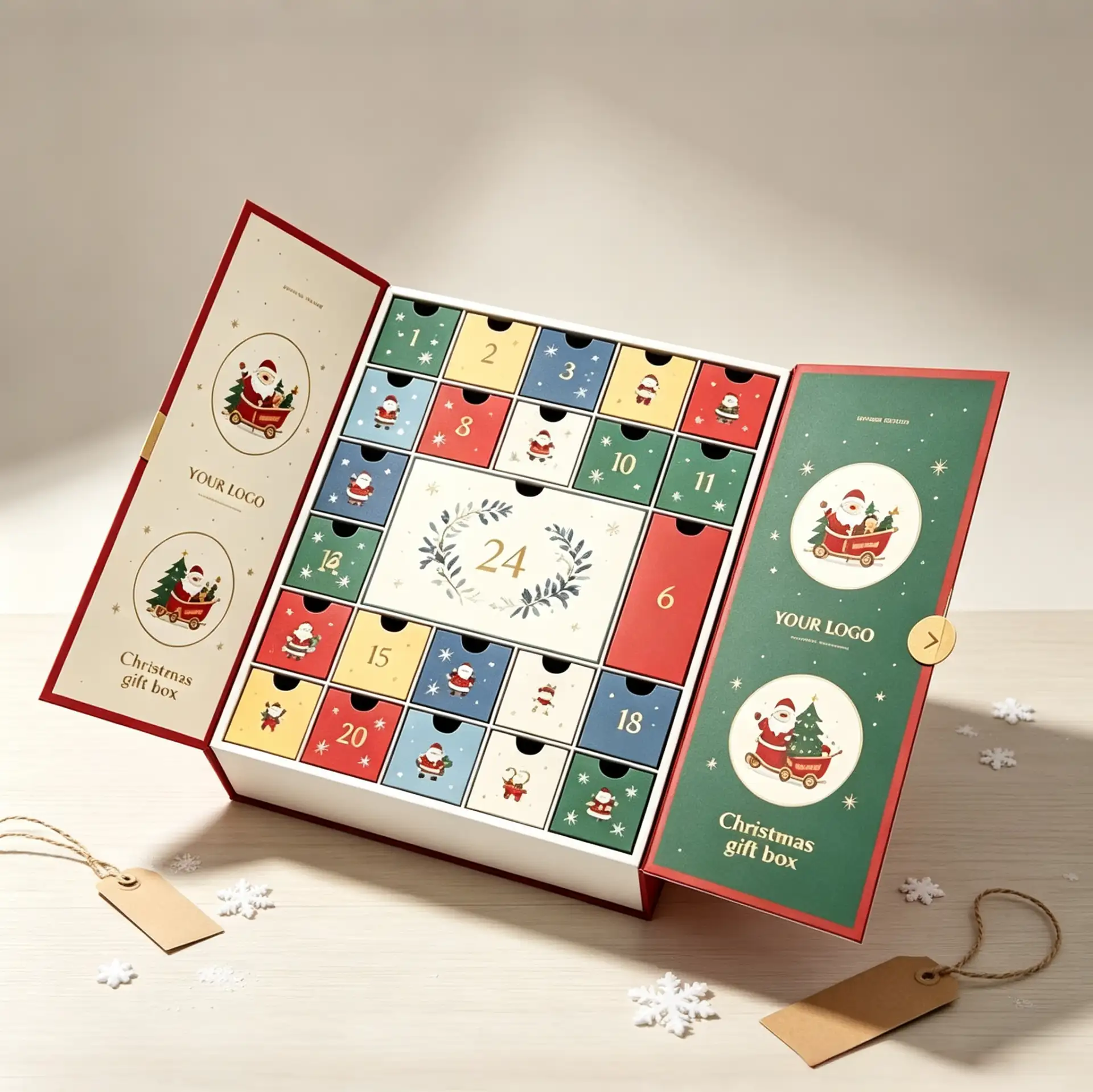
U.S. Beauty DTC Brand Advent Calendar Box — How “24 Days of Surprises” Boosted Year-End Sales
Target Client:Mid-to-high-end skincare/makeup DTC brands in the U.S. (focused on holiday limited editions)
Core Needs:
Holiday Ritual: Move beyond the boring “products stuffed in a big box” approach, increasing user stickiness through an advent calendar format.
Structural Innovation: Needed a design that displays 24 individual compartments while elegantly unfolding like a book (referencing the double-door or flip-top style shown in the images).
Visual Impact: Accurate print colors matching the Christmas vibe (red, green, gold), with a premium feel for the brand logo.
Assembly Efficiency: With 24 small drawers + an outer box, manual assembly costs were extremely high, requiring structural optimization to reduce labor hours.
1.Project Background
In Q4 last year, we connected with a California-based skincare brand. They wanted to launch a Christmas advent calendar, but their previous samples were giving them headaches:
Flimsy structure: Small drawers deformed after a few pulls, sometimes even getting stuck, resulting in a terrible user experience.
Print color deviation: The classic “Christmas green” came out dark and cheap-looking, completely failing to justify the near $100 price tag.
Assembly nightmare: The factory reported that these multi-compartment boxes were too labor-intensive, driving up the MOQ (Minimum Order Quantity) threshold.
Their goal was clear: to create an “Instagrammable” calendar box that users couldn’t resist filming and sharing on TikTok.
2.Hanlong’s Solution
1) Structural Optimization: From “Forced Fit” to “Silky Smooth”
For the double-door/flip-top structure shown in the images, we made two key adjustments:
Reinforcing rib design: Added hidden reinforcement points to the stress areas of the 24 small drawers, ensuring they wouldn’t deform even with repeated pulling.
Magnetic + ribbon dual closure: The outer box uses strong magnets combined with a ribbon tie (as shown in the picture), ensuring shipping safety while adding to the unboxing ritual.
2) Visual Restoration: Pantone Colors + Spot Processes
Spot color printing: Abandoned standard CMYK, using Pantone spot color inks for the Christmas red and vintage green to ensure rich, saturated hues.
Tactile enhancement: Applied hot stamping (foil) or embossing on the logo and numbers, creating a distinct textural difference that can be felt at the fingertips.
3) Production Efficiency
Pre-folding technology: Both the outer box and inner grids utilized machine pre-creased lines, allowing workers to simply slot and assemble them. This reduced single-box assembly time by approximately 30%.
3.Delivery Results
Social media hit: The unboxing video posted by the brand on TikTok garnered hundreds of thousands of views, with searches for the keyword “Unboxing” surging.
Sales breakthrough: The first batch of inventory sold out in less than two weeks, becoming the Top 1 product of the year.
Zero complaints: Thanks to the structural reinforcement, complaints regarding shipping damage and stuck drawers were nearly non-existent.
4.Hanlong Engineer’s Tip
Tolerance control is key: If the tolerance for the 24 compartments isn’t strictly controlled, the total size will deviate significantly, making it impossible to fit into the outer box. We typically keep the tolerance of a single compartment within ±0.1mm.
Inner tray material selection: For eco-friendliness and cost efficiency, we recommend using folded cardboard inserts instead of plastic blisters. As long as the snap-fit structure is well-designed, the stability is just as good as plastic.
Plan ahead: Christmas boxes involve complex processes like foil stamping and spot colors, making the production cycle 2-3 weeks longer than standard boxes. We recommend placing orders at least 3 months in advance.